
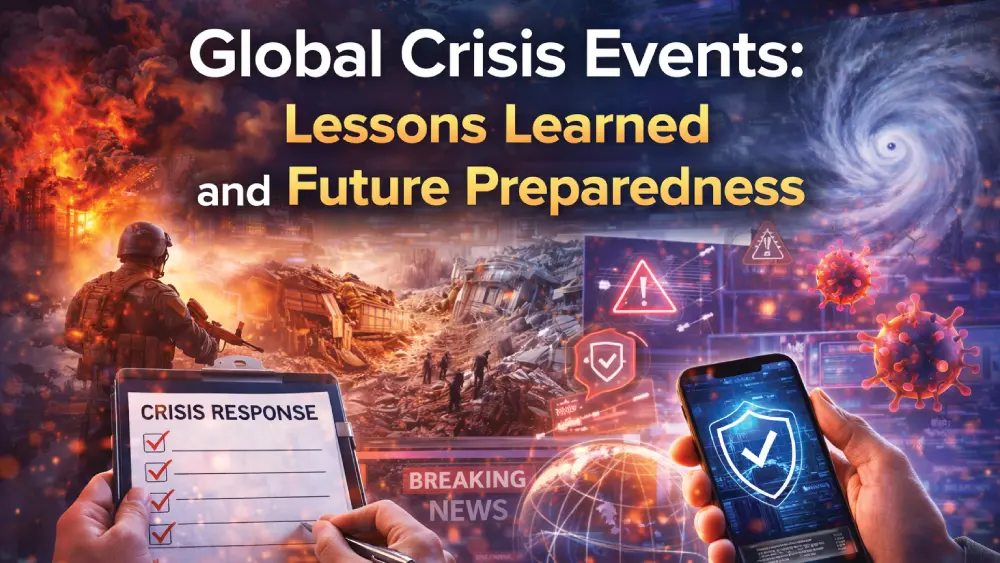
Global crises have always shaped the course of human history. From pandemics and financial meltdowns to geopolitical conflicts and climate disasters, these events test the resilience of nations, institutions, and societies. In today’s interconnected world, crises spread faster and impact deeper than ever before-making preparedness not just important, but essential. As highlighted across evolving global developments, including recent energy disruptions and geopolitical tensions, governments are increasingly revisiting past crisis strategies to manage new challenges. This reinforces a critical reality: the lessons of past crises are the foundation of future resilience. This in-depth article by Global News Grid explores the key lessons learned from global crisis events and outlines actionable strategies for future preparedness.
Global Crisis Events
A global crisis is any event that disrupts large populations across countries, often affecting health, economies, security, or the environment. Events like the COVID-19 pandemic, climate-related disasters, and geopolitical conflicts have demonstrated how vulnerable even the most advanced systems can be.
The speed and scale of modern crises are amplified by globalization. Supply chains, communication networks, and economic systems are deeply interconnected-meaning disruptions in one region can quickly escalate into global emergencies.
Major Types of Global Crises
1. Health Crises
Pandemics such as COVID-19 exposed weaknesses in healthcare infrastructure, supply chains, and emergency response systems worldwide.
2. Economic Crises
Financial downturns, inflation spikes, and global recessions disrupt livelihoods and destabilize markets.
3. Geopolitical Conflicts
Wars and political tensions affect energy supplies, trade routes, and global stability.
4. Environmental Crises
Climate change-driven disasters like floods, droughts, and wildfires are increasing in frequency and intensity.
5. Cybersecurity Threats
With digital transformation, cyberattacks now pose risks comparable to traditional crises, threatening critical infrastructure.
Key Lessons Learned from Past Crises
1. Early Preparedness is Critical
One of the most significant lessons is the importance of early action. Delayed responses during pandemics or disasters often lead to exponential damage. Preparedness plans must be proactive rather than reactive.
Research shows that early detection and rapid response are essential to containing crises effectively.
2. Strong Coordination Saves Lives
Crisis management requires seamless coordination between governments, organizations, and international bodies. Lack of alignment often leads to confusion and inefficiency.
Effective coordination mechanisms and clearly defined roles significantly improve response outcomes.
3. Data and Evidence-Based Decision Making
Accurate data and scientific evidence are vital during crises. Decisions based on misinformation or incomplete data can worsen the situation.
The COVID-19 pandemic highlighted the need for real-time data analysis and adaptive strategies.
4. Resilient Supply Chains are Essential
Global crises often disrupt supply chains, leading to shortages of essential goods. The pandemic revealed heavy reliance on specific regions for critical supplies.
Building diversified and localized supply chains is key to future resilience.
5. Social Protection Systems Matter
Crises disproportionately affect vulnerable populations. Governments must ensure strong social safety nets to protect livelihoods.
Many countries expanded social protection programs during crises, highlighting their importance in reducing inequality.
6. Communication and Public Trust
Transparent communication builds public trust and ensures compliance with emergency measures. Misinformation can severely undermine crisis response efforts.
The Role of Global Cooperation
No country can handle global crises alone. International collaboration is essential for sharing resources, knowledge, and strategies.
Global organizations play a critical role in coordinating responses, especially during pandemics and climate emergencies. However, geopolitical tensions often hinder cooperation.
Recent crises have shown both the strengths and weaknesses of global collaboration-highlighting the need for stronger international frameworks.
Technology and Crisis Management
1. Digital Transformation
Technology has revolutionized crisis response through tools like:
- Real-time data tracking
- AI-based predictions
- Remote communication systems
2. Telemedicine and Remote Work
During the pandemic, digital platforms enabled continuity in healthcare and business operations.
3. Cybersecurity Preparedness
As reliance on digital systems grows, protecting infrastructure from cyber threats becomes critical. Lessons from global crises emphasize the need for proactive cybersecurity frameworks.
Challenges in Crisis Preparedness
1. Lack of Long-Term Planning
Many governments focus on immediate issues rather than long-term resilience.
2. Resource Constraints
Developing countries often lack the resources to implement robust preparedness systems.
3. Political and Bureaucratic Barriers
Delays in decision-making can hinder effective responses.
4. Inequality and Vulnerability
Crises tend to widen existing inequalities, making recovery more difficult for disadvantaged groups.
Future Strategies for Global Resilience
1. Building Adaptive Systems
Preparedness strategies must be flexible to adapt to evolving threats. The concept of Preparedness, Response, Recovery, and Resilience (PR³) emphasizes a holistic approach to crisis management.
2. Investing in Healthcare Infrastructure
Strengthening healthcare systems is crucial to managing future pandemics and health emergencies.
3. Strengthening Global Supply Chains
Diversification and localization can reduce dependency and improve resilience.
4. Enhancing International Collaboration
Global agreements and partnerships must be strengthened to ensure coordinated responses.
5. Promoting Sustainable Development
Addressing climate change and environmental risks is essential to preventing future crises.
6. Leveraging Technology and Innovation
Emerging technologies like AI, blockchain, and big data analytics can improve crisis prediction and management.
The Role of Governments, Businesses, and Individuals
Governments
- Develop comprehensive crisis management plans
- Invest in infrastructure and research
- Ensure transparent communication
Businesses
- Build resilient supply chains
- Adopt digital transformation
- Implement risk management strategies
Individuals
- Stay informed and prepared
- Follow safety guidelines
- Contribute to community resilience
Conclusion
Global crises are inevitable, but their impact can be minimized through preparedness, collaboration, and innovation. The lessons learned from past events-especially recent global disruptions-offer valuable insights into building a more resilient future.
As the world continues to face evolving challenges, platforms like Global News Grid play a vital role in informing and educating audiences about global events and preparedness strategies.
The key takeaway is clear: preparedness is not a one-time effort but a continuous process that evolves with changing global dynamics.
FAQs
What are global crisis events?
Global crisis events are large-scale disruptions that affect multiple countries, such as pandemics, wars, financial crises, and climate disasters.
Why is preparedness important for global crises?
Preparedness helps reduce the impact of crises by enabling faster response, better coordination, and efficient resource management.
What lessons were learned from COVID-19?
Key lessons include the importance of early action, global cooperation, strong healthcare systems, and data-driven decision-making.
How can countries improve crisis preparedness?
Countries can invest in infrastructure, strengthen policies, enhance international cooperation, and adopt advanced technologies.
What role does technology play in crisis management?
Technology enables real-time monitoring, predictive analysis, remote communication, and efficient resource allocation during crises.
What is the future of global crisis management?
The future lies in adaptive systems, global collaboration, and sustainable development to handle increasingly complex challenges.


