
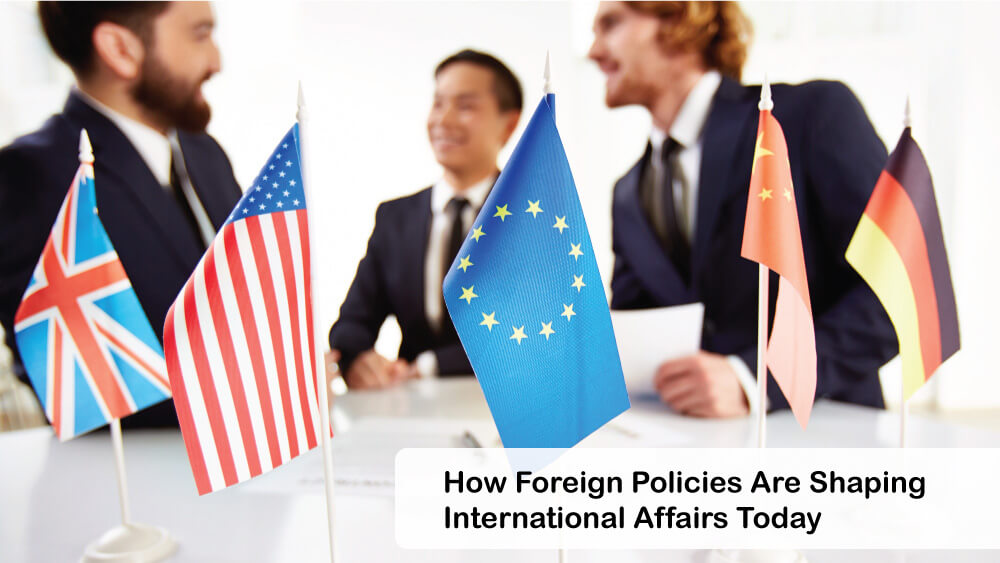
In today’s interconnected world, foreign policies are no longer limited to diplomacy behind closed doors. They actively shape global narratives, influence economies, and redefine power structures. As nations respond to shifting geopolitical realities, their foreign policy decisions play a central role in determining the course of international affairs. From trade agreements to military alliances, and from climate commitments to digital governance, foreign policies are evolving rapidly. Platforms like Global News Grid highlight how these developments are continuously reshaping the global landscape.
Foreign Policy in the Modern World
Foreign policy refers to a country’s strategy in dealing with other nations. Traditionally centered on diplomacy and defense, modern foreign policy now includes economic, technological, environmental, and cultural dimensions.
Today, foreign policy is shaped by:
- National interests and security priorities
- Economic growth and trade ambitions
- Global challenges like climate change and pandemics
- Public opinion and political leadership
Countries are increasingly adopting flexible and adaptive foreign policies to respond to fast-changing global dynamics.
Key Drivers of Contemporary Foreign Policies
Several factors are influencing how countries design and implement their foreign policies:
Geopolitical Competition
Rivalries between major powers, especially between United States and China, are redefining global alliances and economic systems.
Economic Interests
Trade routes, energy security, and access to resources drive foreign policy decisions.
National Security Concerns
Threats such as terrorism, cyber warfare, and regional instability influence diplomatic strategies.
Climate and Sustainability Goals
Countries are increasingly aligning foreign policies with environmental commitments and global climate agreements.
Major Global Powers and Their Strategic Approaches
United States
The United States focuses on maintaining global leadership through strategic alliances, military presence, and economic influence.
China
China emphasizes economic expansion through initiatives like the Belt and Road Initiative, aiming to strengthen trade and connectivity.
Russia
Russia prioritizes regional dominance and security interests, often influencing neighboring regions.
European Union
The European Union adopts a cooperative approach, focusing on diplomacy, trade, and regulatory influence.
These major players shape international affairs through their strategic priorities and global engagements.
The Role of Alliances and International Organizations
International alliances and organizations play a crucial role in shaping foreign policy outcomes.
NATO
The NATO remains a key military alliance, influencing global security dynamics.
United Nations
The United Nations provides a platform for diplomacy, conflict resolution, and global cooperation.
G20 and Other Forums
Global forums facilitate discussions on economic stability, climate change, and international development.
These institutions help coordinate responses to global challenges and foster cooperation among nations.
Economic Diplomacy and Trade Influence
Economic diplomacy has become a cornerstone of foreign policy. Countries use trade agreements, sanctions, and investments to achieve strategic goals.
Trade Agreements
Bilateral and multilateral agreements influence global supply chains and economic growth.
Sanctions and Tariffs
Economic sanctions are often used to pressure nations into policy changes.
Global Markets
Foreign policies directly impact stock markets, currencies, and international investments.
The interconnected nature of global economies means that decisions made in one country can have ripple effects worldwide.
Technology, Cybersecurity, and Foreign Policy
Technology is transforming foreign policy in unprecedented ways.
Cybersecurity
Cyber threats have become a major concern, leading to new defense strategies and international regulations.
Digital Diplomacy
Countries are using social media and digital platforms to influence global audiences.
Artificial Intelligence and Innovation
Technological advancements are shaping defense systems, intelligence gathering, and economic competitiveness.
Foreign policies now include strategies to manage digital risks and leverage technological opportunities.
Regional Conflicts and Policy Responses
Foreign policies are often tested during regional conflicts.
Middle East Tensions
Ongoing conflicts influence global energy markets and security strategies.
Asia-Pacific Dynamics
Territorial disputes and military presence are shaping policies in this region.
Eastern Europe
Geopolitical tensions have led to shifts in alliances and defense strategies.
Countries must balance diplomacy and defense to manage these complex situations.
The Impact on Developing Nations
Foreign policies of major powers significantly affect developing countries.
Economic Dependency
Developing nations often rely on foreign investments and aid.
Political Influence
Global powers may influence domestic policies through diplomatic pressure.
Opportunities for Growth
Strategic partnerships can lead to infrastructure development and economic progress.
However, these relationships can also create challenges related to sovereignty and long-term sustainability.
The Future of International Affairs
The future of international affairs will be shaped by evolving foreign policies in several ways:
- Increased focus on multilateral cooperation
- Greater emphasis on climate action
- Expansion of digital governance frameworks
- Rising influence of emerging economies
As global challenges become more complex, countries will need to adopt more collaborative and innovative approaches.
Conclusion
Foreign policies are at the heart of today’s international affairs, influencing everything from global security to economic growth. As nations navigate an increasingly interconnected world, their decisions shape not only their own futures but also the global order.
Understanding these dynamics is essential for policymakers, businesses, and individuals alike. Insights from platforms like Global News Grid continue to shed light on how foreign policies evolve and impact the world around us.
FAQs
What is foreign policy?
Foreign policy is a country’s strategy for interacting with other nations, focusing on diplomacy, trade, security, and global cooperation.
Why are foreign policies important today?
They influence global stability, economic growth, and international relationships in an increasingly interconnected world.
How do foreign policies affect global economies?
Through trade agreements, sanctions, and investments, foreign policies shape global markets and economic trends.
What role do international organizations play?
Organizations like the United Nations help coordinate global efforts and resolve conflicts.
How is technology impacting foreign policy?
Technology introduces new challenges like cybersecurity threats while offering opportunities for digital diplomacy and innovation.
What is the future of international affairs?
It will likely focus on cooperation, sustainability, and adapting to technological advancements and emerging global challenges.


