
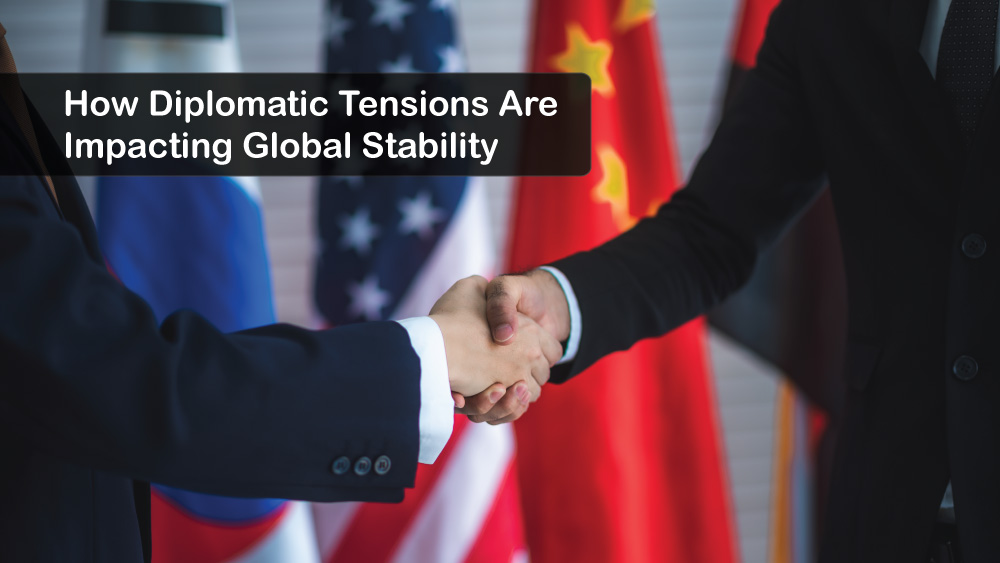
In today’s interconnected world, diplomacy plays a crucial role in maintaining peace, economic growth, and international cooperation. However, rising diplomatic tensions between major powers, regional rivals, and even long-standing allies are increasingly reshaping the global order. From trade disputes to military standoffs, these tensions are not only influencing international relations but also directly affecting global stability.
This in-depth article explores how diplomatic conflicts are evolving, their far-reaching consequences, and what the future holds for international affairs.
Impact of Diplomatic Tensions
Diplomatic tensions refer to strained relationships between countries due to political disagreements, territorial disputes, economic conflicts, or ideological differences. In recent years, global diplomacy has shifted from cooperation to competition, leading to a more fragmented and unpredictable world.
The post-globalization era is increasingly defined by geopolitical rivalries, where nations prioritize national interests over collective stability.
Key Causes of Rising Diplomatic Conflicts
1. Geopolitical Rivalries
Major powers are competing for influence across regions such as Asia, Europe, and the Middle East. Strategic competition between nations has intensified, particularly in areas like technology, trade, and military presence.
2. Trade Disputes and Economic Policies
Trade wars, tariffs, and sanctions are becoming common tools of diplomacy. These measures often escalate tensions and disrupt global markets.
3. Territorial and Sovereignty Issues
Disputes over borders and territories continue to fuel diplomatic conflicts, often leading to military confrontations or prolonged standoffs.
4. Ideological Differences
Differences in governance systems, political ideologies, and human rights approaches further widen diplomatic gaps.
Major Examples of Current Diplomatic Tensions
1. US–Iran Conflict and Middle East Instability
Recent escalations in the Middle East have demonstrated how diplomatic breakdowns can quickly evolve into military conflicts, affecting global energy supplies and financial markets.
- Oil supply disruptions have increased global inflation risks.
- Closure of key trade routes like the Strait of Hormuz has impacted global trade flows.
2. China–Japan Diplomatic Crisis
The ongoing dispute over Taiwan has strained relations between China and Japan, leading to trade restrictions and reduced cooperation.
- Export restrictions and reduced tourism have affected both economies.
3. US–India Trade and Diplomatic Frictions
Even strategic partners like the United States and India have experienced tensions due to differing geopolitical priorities and economic policies.
4. Regional Conflicts in Southeast Asia
Border disputes, such as the Cambodia–Thailand crisis, highlight how localized tensions can disrupt regional stability and displace populations.
Economic Impact on Global Stability
Diplomatic tensions have significant economic consequences, including:
1. Disruption of Global Trade
Geopolitical conflicts are leading to fragmentation in global trade systems. Countries are forming regional alliances instead of relying on global cooperation.
- Trade fragmentation has already reduced global trade efficiency.
2. Rising Inflation and Energy Costs
Conflicts affecting energy-producing regions cause price volatility worldwide.
- Oil price surges due to geopolitical conflicts impact economies globally.
3. Financial Market Instability
Markets react quickly to diplomatic tensions, leading to volatility in stocks, currencies, and commodities.
Security Risks and Military Escalation
Diplomatic tensions often escalate into military conflicts, posing serious risks to global stability.
1. Increased Militarization
Countries are investing heavily in defense and military capabilities due to growing uncertainties.
2. Risk of Proxy Wars
Indirect conflicts between major powers in third-party regions are becoming more common.
3. Nuclear and Strategic Threats
Tensions between nuclear-armed states significantly increase the risk of global crises.
Impact on Global Institutions and Cooperation
International organizations like the United Nations and World Trade Organization are facing challenges due to diplomatic divisions.
- Global trade governance is under strain due to disagreements among major economies.
Key Challenges:
- Weak enforcement mechanisms
- Declining trust among member nations
- Rise of unilateral decision-making
The Role of Emerging Powers in Diplomacy
Countries like India are playing an increasingly important role in stabilizing global diplomacy.
- India’s strategy of balancing relations with multiple powers positions it as a key mediator.
Emerging economies are:
- Promoting multilateral dialogue
- Acting as neutral negotiators
- Supporting Global South interests
Future Trends in International Affairs
1. Shift Toward Multipolar World
The dominance of a single global superpower is fading, giving rise to a multipolar global order.
2. Rise of Strategic Alliances
Countries are forming issue-based alliances rather than long-term partnerships.
3. Digital and Cyber Diplomacy
Cybersecurity and digital policies are becoming key components of international relations.
4. Economic Decoupling
Countries are reducing dependence on rival economies, leading to regional economic blocs.
Conclusion
Diplomatic tensions are no longer isolated incidents-they are defining the structure of modern international affairs. From economic disruptions to security risks, their impact on global stability is profound and far-reaching.
As highlighted by Global News Grid, understanding these evolving dynamics is essential for governments, businesses, and individuals alike. The future of global stability will depend on how nations navigate diplomacy, cooperation, and conflict in an increasingly complex world.
To maintain stability, countries must prioritize dialogue, strengthen international institutions, and adopt collaborative approaches to global challenges.
FAQs
What are diplomatic tensions?
Diplomatic tensions are strained relations between countries caused by political, economic, or territorial disagreements.
How do diplomatic tensions affect the global economy?
They disrupt trade, increase inflation, and create uncertainty in financial markets.
Can diplomatic tensions lead to war?
Yes, unresolved diplomatic conflicts can escalate into military confrontations or wars.
Why are global tensions increasing today?
Factors include geopolitical rivalry, economic competition, and shifting global power dynamics.
What role do emerging countries play in global diplomacy?
Emerging powers act as mediators and promote balanced international cooperation.
How can global stability be maintained?
Through diplomacy, multilateral cooperation, and strong international institutions.


