
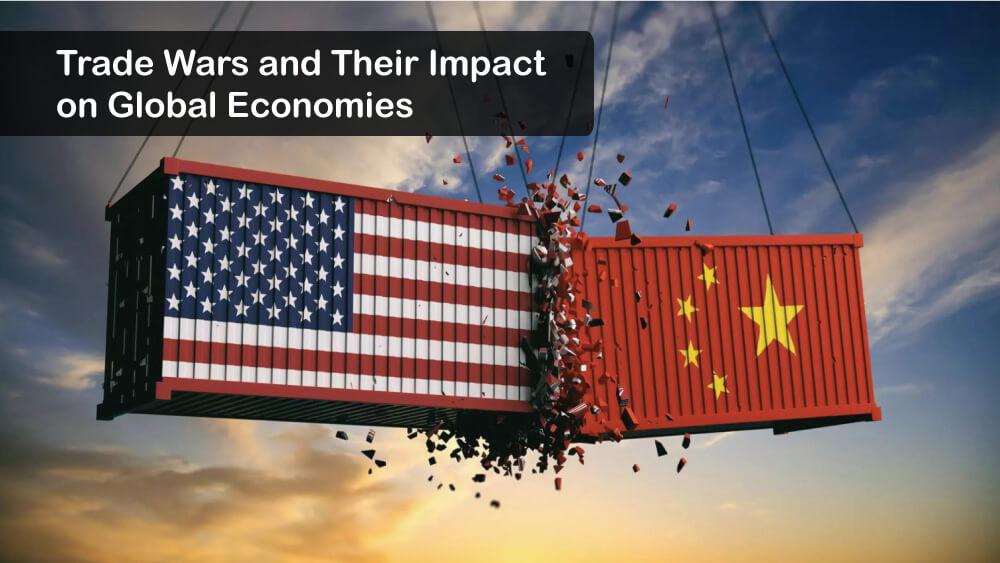
In today’s rapidly shifting geopolitical landscape, trade wars have become one of the most significant forces shaping global economic dynamics. As countries increasingly prioritize national interests, the ripple effects of tariffs, sanctions, and protectionist policies are felt across industries, markets, and societies worldwide. This article explores the causes, consequences, and future outlook of trade wars, highlighting their role in ever-evolving international affairs.
Impact of Trade Wars
A trade war occurs when countries impose tariffs or other restrictions on each other’s goods and services in retaliation for perceived unfair trade practices. While these measures are often introduced to protect domestic industries, they frequently escalate into prolonged economic conflicts.
Economists widely agree that trade wars tend to reduce overall economic efficiency and disrupt global growth. According to research, such conflicts often shrink global trade volumes and create widespread uncertainty across markets.
What Triggers a Trade War?
Trade wars are typically driven by a mix of economic, political, and strategic factors:
Trade imbalances (large import-export gaps)
Protection of domestic industries
Intellectual property disputes
Currency manipulation concerns
Geopolitical rivalries
In many cases, a single tariff decision can trigger a chain reaction, as affected countries retaliate with their own restrictions, escalating tensions further.
Key Tools Used in Trade Wars
Countries use several policy tools to gain leverage in trade disputes:
a. Tariffs
Taxes imposed on imported goods, making them more expensive.
b. Import Quotas
Limits on the quantity of goods that can be imported.
c. Subsidies
Government financial support to domestic industries.
d. Currency Devaluation
Making exports cheaper and more competitive globally.
e. Sanctions
Restrictions on trade with specific countries or industries.
These tools often create a “tit-for-tat” scenario, where each action leads to a counteraction, intensifying the conflict.
Historical Examples of Trade Wars
Trade wars are not new. Some notable examples include:
- The Smoot-Hawley Tariff Act (1930), which worsened the Great Depression
- U.S.–China Trade War (2018–2020)
- Ongoing tariff disputes between major economies
These cases demonstrate how trade conflicts can escalate quickly and have long-lasting global consequences.
Impact on Global Economies
1. Slower Economic Growth
Trade wars reduce global trade flows, leading to slower GDP growth. Studies suggest that global GDP could decline significantly during prolonged trade conflicts.
2. Disrupted Supply Chains
Modern supply chains are highly interconnected. Trade restrictions force companies to shift suppliers, increasing costs and inefficiencies.
3. Inflationary Pressures
Tariffs increase the cost of imported goods, which businesses often pass on to consumers, resulting in higher prices.
4. Reduced Investment
Uncertainty caused by trade wars discourages long-term investments, slowing innovation and economic development.
5. Fragmentation of Global Trade
Countries may form regional alliances, leading to a fragmented global trade system rather than a unified market.
Effects on Businesses and Consumers
Businesses
- Increased production costs
- Supply chain disruptions
- Reduced export opportunities
- Lower profit margins
Consumers
- Higher prices on everyday goods
- Limited product availability
- Reduced purchasing power
Trade wars effectively act as an indirect tax on consumers, impacting especially low-income households.
Trade Wars and Emerging Markets
Emerging economies are particularly vulnerable to trade conflicts:
- Dependence on exports makes them sensitive to global demand shocks
- Currency volatility increases financial risks
- Reduced foreign investment hampers development
Research shows that trade wars can widen income inequality between developed and developing nations.
The Shifting Landscape of Global Trade Governance
In the modern era of trade wars, the traditional role of global institutions is undergoing significant transformation. While organizations were originally designed to ensure fairness and stability in international trade, their influence is increasingly challenged by rising economic nationalism and geopolitical competition.
1. Decline of Multilateralism
For decades, global trade operated under a multilateral system where countries cooperated through shared rules and agreements. However, trade wars have weakened this structure. Nations are now more inclined to act independently, prioritizing national interests over collective agreements.
This shift has led to:
- Reduced effectiveness of global dispute resolution systems
- Increased unilateral tariff decisions
- Growing skepticism toward international trade rules
2. Rise of Bilateral and Regional Agreements
As multilateral frameworks face challenges, countries are turning toward smaller, more controlled trade agreements. Bilateral and regional deals allow nations to negotiate terms that better suit their specific economic goals.
Examples of this shift include:
- Free trade agreements between select countries
- Regional economic partnerships
- Strategic trade alliances based on political alignment
This trend is reshaping global trade into a more fragmented system, where influence depends on economic power and strategic partnerships.
3. Power Dynamics in Global Trade
Trade wars highlight how economic power plays a crucial role in shaping outcomes. Larger economies often have greater leverage, allowing them to impose tariffs with less immediate impact on their domestic markets.
Smaller and developing nations, on the other hand:
- Face higher vulnerability to external shocks
- Have limited negotiating power
- Often adapt policies based on major economies’ decisions
This imbalance contributes to widening global economic disparities.
4. Digital Trade and Regulatory Challenges
The rapid growth of digital commerce has introduced new complexities in global trade governance. Unlike traditional goods, digital services are harder to regulate and tax, leading to disagreements between nations.
Key issues include:
- Data localization requirements
- Cross-border data flow restrictions
- Digital taxation policies
Trade wars are increasingly extending into the digital space, making governance even more complicated.
5. The Future of Trade Cooperation
Despite current challenges, the need for global cooperation remains critical. Experts believe that future trade systems may evolve into hybrid models that combine global oversight with regional flexibility.
Potential developments include:
- Reforms in international trade frameworks
- Stronger regional economic blocs
- New rules for digital and green trade
- Increased focus on resilience rather than efficiency
In this evolving environment, understanding trade governance is more important than ever. As highlighted by Global News Grid, the future of international trade will depend on how effectively nations balance competition with cooperation.
Modern Trade Wars: Recent Developments
Recent trade conflicts illustrate how dynamic and unpredictable global trade has become:
- Tariffs between major economies have reached unprecedented levels
- Supply chains are shifting toward “friend-shoring”
- Countries are focusing on economic self-reliance
For instance, recent tariff policies have reshaped global trade flows, reducing dependency on certain countries while increasing trade with others.
At the same time, economists note that while tariffs may generate revenue, their overall economic benefits remain limited.
Future Outlook of Global Trade Relations
The future of global trade will likely be shaped by:
a. Regional Trade Agreements
Countries may prioritize regional partnerships over global frameworks.
b. Digital Trade Expansion
E-commerce and digital services will become key battlegrounds.
c. Supply Chain Diversification
Businesses will seek to reduce dependency on single markets.
d. Economic Decoupling
Major economies may split into separate economic blocs.
e. Sustainability and Green Trade
Environmental concerns will influence trade policies.
As highlighted by Global News Grid, the world is entering a new phase where trade policies are increasingly influenced by geopolitical strategies rather than purely economic considerations.
Conclusion
Trade wars are a defining feature of modern international affairs, reflecting the complex interplay between economics and geopolitics. While they may offer short-term benefits to certain industries, their long-term consequences-slower growth, higher prices, and global instability-often outweigh the gains.
In an interconnected world, cooperation remains the key to sustainable economic growth. As global dynamics continue to evolve, platforms like Global News Grid play a vital role in helping audiences understand these complex developments and their far-reaching implications.
FAQs
What is a trade war in simple terms?
A trade war is a conflict between countries where they impose tariffs or restrictions on each other’s goods to protect their own economies.
Are trade wars always harmful?
While they may benefit specific domestic industries in the short term, they generally harm global economic growth and increase costs for consumers.
How do trade wars affect consumers?
They lead to higher prices, fewer choices, and reduced purchasing power due to increased costs of imported goods.
Why do countries start trade wars?
Countries initiate trade wars to protect domestic industries, reduce trade deficits, or respond to unfair trade practices.
Which countries are most affected by trade wars?
Export-dependent economies and emerging markets are often the most vulnerable due to their reliance on global trade.
Can trade wars lead to global recessions?
Yes, prolonged trade wars can slow global growth and, in extreme cases, contribute to economic downturns.


