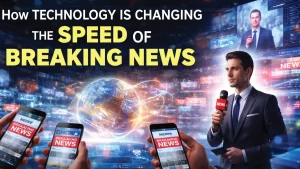
In today’s hyper-connected digital age, the way we consume news has transformed dramatically. Gone are the days when people relied solely on newspapers or scheduled TV broadcasts. Now, breaking news reaches audiences instantly-often within seconds of an event unfolding. This shift has elevated the role of media to unprecedented levels, making it a cornerstone of modern society. From traditional television channels to digital platforms and social media networks, the media ecosystem plays a vital role in delivering real-time updates that inform, influence, and sometimes even shape public perception. In this blog, we explore how media operates in the fast-paced world of breaking news, its impact, challenges, and the future ahead.
Real-Time Breaking News
Breaking news refers to newly received information about an event that is currently unfolding or has just occurred. In the modern era, the demand for instant updates has grown exponentially. People expect to know what’s happening around the world in real time, whether it’s a political development, natural disaster, or major global event.
Media organizations now operate in a 24/7 cycle, ensuring that audiences stay informed at all times. This continuous flow of information has redefined how news is created, shared, and consumed.
Evolution of Media in News Delivery
The journey of media from print to digital has been remarkable. Initially, newspapers dominated the news landscape, followed by radio and television broadcasts. While these formats were effective, they lacked immediacy.
With the advent of the internet, news websites began offering faster updates. Today, mobile apps, live streaming, and push notifications ensure that breaking news reaches users instantly.
Modern platforms like Global News Grid exemplify this transformation, combining speed, accessibility, and reliability to deliver timely updates across multiple channels.
Key Platforms Driving Instant News
Television Media
Television still plays a crucial role, especially during major events. Live coverage, expert analysis, and on-ground reporting provide viewers with comprehensive insights.
Online News Portals
Websites offer continuous updates, often publishing stories as they develop. These platforms are optimized for speed and accessibility.
Mobile Applications
News apps send real-time alerts directly to users’ devices, ensuring that they never miss important updates.
Social Media Platforms
Platforms like Twitter, Facebook, and Instagram have become major sources of breaking news. Journalists and citizens alike share updates instantly, often before traditional media can react.
The Importance of Speed in Breaking News
In the world of breaking news, speed is everything. Being the first to report a story can significantly boost a media outlet’s credibility and audience reach.
However, the race to break news first has intensified competition among media organizations. This urgency has led to innovations such as live blogging, instant notifications, and real-time video coverage.
Speed not only satisfies audience demand but also ensures that critical information-such as emergency alerts-reaches people in time to take action.
Accuracy vs. Speed: A Constant Balancing Act
While speed is crucial, accuracy remains the foundation of credible journalism. Delivering incorrect information can lead to misinformation, panic, and loss of trust.
Media organizations must verify facts quickly without compromising reliability. This often involves cross-checking sources, confirming details, and updating stories as new information emerges.
The challenge lies in maintaining this balance in a highly competitive environment where being first is often prioritized.
Role of Social Media in News Dissemination
Social media has revolutionized how breaking news is shared and consumed. It allows real-time interaction, enabling users to comment, share, and engage with content instantly.
Advantages:
- Immediate updates from eyewitnesses
- Wide reach and viral potential
- Interactive engagement
Disadvantages:
- Spread of misinformation
- Lack of verification
- Potential for manipulation
Despite these challenges, social media remains a powerful tool for delivering breaking news quickly and efficiently.
Impact on Public Opinion and Society
Real-time news significantly influences public perception. Instant access to information allows people to form opinions quickly, often based on initial reports.
This immediacy can shape narratives, influence political decisions, and even impact financial markets. However, it also raises concerns about incomplete or biased information affecting public understanding.
Media organizations must strive to provide balanced and factual reporting to ensure informed decision-making among audiences.
Challenges Faced by Modern Media
Information Overload
The constant stream of updates can overwhelm audiences, making it difficult to distinguish important news from trivial content.
Misinformation and Fake News
The speed of digital platforms makes it easier for false information to spread rapidly.
Competition and Pressure
Media outlets face intense pressure to publish news quickly, often at the expense of thorough verification.
Technological Dependence
Reliance on digital tools and platforms can lead to vulnerabilities, including cyber threats and technical failures.
The Role of Technology in Real-Time Reporting
Technology is the backbone of modern news delivery. Innovations such as artificial intelligence, data analytics, and automation have enhanced the speed and efficiency of reporting.
Key Technologies:
- Artificial Intelligence (AI): Automates news writing and data analysis
- Live Streaming: Enables real-time visual coverage
- Push Notifications: Instantly alerts users
- Cloud Computing: Supports fast content distribution
These advancements have made it possible for platforms like Global News Grid to deliver breaking news with unparalleled speed and accuracy.
Ethical Responsibilities in Breaking News
With great power comes great responsibility. Media organizations must adhere to ethical standards while delivering real-time updates.
Key Ethical Principles:
- Accuracy and truthfulness
- Respect for privacy
- Avoidance of sensationalism
- Accountability and transparency
Ethical journalism ensures that the public receives reliable information without unnecessary harm or panic.
Future Trends in Media and Breaking News
The future of breaking news is likely to be shaped by continued technological advancements and changing audience preferences.
Emerging Trends:
- AI-driven journalism for faster reporting
- Personalized news feeds based on user interests
- Augmented Reality (AR) for immersive storytelling
- Blockchain technology for verifying authenticity
As media continues to evolve, the focus will remain on delivering accurate, real-time information in innovative ways.
Conclusion
The role of media in delivering real-time breaking news is more critical than ever. It serves as the primary source of information in a fast-paced world where events unfold rapidly.
While speed is essential, maintaining accuracy and ethical standards is equally important. The challenge for modern media lies in balancing these factors while adapting to new technologies and audience expectations.
As platforms continue to innovate, the future of breaking news promises to be even more dynamic, interactive, and impactful.
FAQs
What is breaking news?
Breaking news refers to newly occurring or developing events that are reported immediately as they happen.
Why is real-time news important?
Real-time news keeps people informed about critical events, enabling them to respond quickly and make informed decisions.
How does social media impact breaking news?
Social media accelerates news dissemination but also increases the risk of misinformation due to lack of verification.
What challenges do media organizations face in delivering breaking news?
They face challenges such as maintaining accuracy, managing misinformation, and handling the pressure of fast reporting.
How does technology improve news delivery?
Technology enables faster reporting through AI, live streaming, and instant notifications, enhancing the overall news experience.
What is the future of breaking news?
The future includes AI-driven journalism, personalized content, and immersive storytelling technologies like AR and VR.