
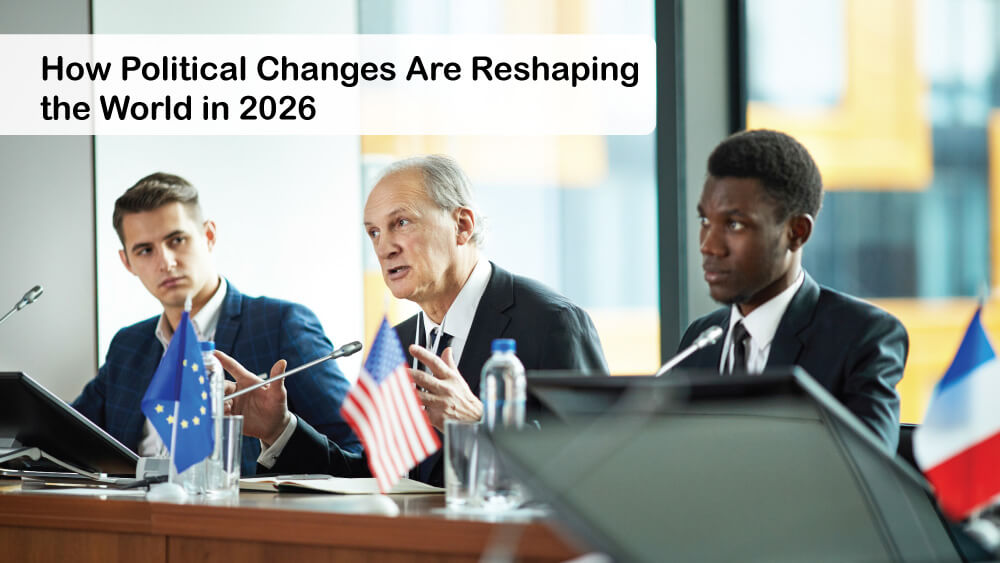
The year 2026 marks a turning point in global politics. Across continents, political changes are rapidly reshaping how nations interact, compete, and collaborate. From shifting alliances and economic nationalism to technological disruptions and climate-driven policies, the global political environment is evolving faster than ever before. For readers of Global News Grid, understanding these changes is essential to staying informed about how world events impact everyday life, business, and international stability. This article explores the key political transformations defining 2026 and what they mean for the future.
The Global Political Landscape in 2026
The global political order is no longer dominated by a single superpower. Instead, it is becoming increasingly multipolar, with countries like the United States, China, the European Union, and regional powers all shaping global agendas.
Experts suggest that geopolitical volatility will remain a defining feature of 2026, influencing policy decisions, economic strategies, and international relations.
At the same time, the world is facing a convergence of risks-ranging from geopolitical conflicts and economic instability to climate challenges and technological disruption.
Rise of Geopolitical Rivalries
One of the most significant political shifts in 2026 is the intensification of geopolitical rivalries.
Key Developments:
- Increasing tension between major powers like the U.S. and China
- Continued instability linked to conflicts in regions such as Eastern Europe and the Middle East
- Strategic competition over technology, energy, and military dominance
The global system is moving toward a “managed rivalry” model, where countries compete aggressively but avoid direct large-scale conflict.
However, ongoing conflicts and military buildups are contributing to uncertainty. Political violence and defense spending have reached historic highs, signaling a more fragile global environment.
The Shift Toward Economic Nationalism
Economic nationalism is reshaping global trade and investment policies. Governments are increasingly prioritizing domestic industries, supply chain security, and strategic autonomy.
Key Trends:
- Protectionist trade policies
- Increased government intervention in markets
- Focus on domestic manufacturing and energy independence
This shift is moving the world away from globalization toward a more fragmented economic system.
Global growth is also slowing, with major economies experiencing reduced expansion rates, further intensifying competition for resources and markets.
Elections, Populism, and Democratic Pressures
Political changes in 2026 are also driven by elections, rising populism, and growing public dissatisfaction.
Emerging Patterns:
- Youth-led movements demanding transparency and accountability
- Increased polarization within democracies
- Challenges to judicial independence and institutional trust
In several regions, political leaders are facing backlash over governance and reform policies. For example, recent political developments in Europe highlight tensions between governments and judicial systems, raising concerns about democratic stability.
Meanwhile, upcoming elections in parts of Africa are expected to reflect growing demands for political reform and accountability.
The Role of Technology and AI in Politics
Technology, particularly artificial intelligence, is becoming a powerful political tool.
Key Impacts:
- AI-driven governance and decision-making
- Digital propaganda and misinformation campaigns
- Cybersecurity and data sovereignty concerns
In 2026, the focus has shifted from AI hype to real-world implementation, with governments integrating AI into policy and infrastructure systems.
At the same time, misinformation and digital manipulation are emerging as major threats to democratic processes, influencing elections and public opinion worldwide.
Climate Politics and Resource Conflicts
Climate change is no longer just an environmental issue-it is a political one.
Political Implications:
- Competition over water, energy, and natural resources
- Disputes related to climate migration
- Policy disagreements on emissions and sustainability
Climate-related challenges are increasingly influencing geopolitical strategies, particularly in regions vulnerable to extreme weather and resource scarcity.
Additionally, global attention is shifting toward sustainable energy transitions, although political disagreements often slow progress.
Regional Power Shifts and Emerging Nations
Emerging economies are gaining influence in global politics, reshaping traditional power dynamics.
Notable Trends:
- Increased assertiveness from countries in Asia, Africa, and Latin America
- Regional alliances gaining importance
- Decline of Western dominance in certain areas
For instance, political developments in countries like Venezuela and strategic tensions involving global powers highlight how regional events can have global implications.
These shifts are contributing to a more decentralized global order.
Impact on Global Economy and Trade
Political changes are having a direct impact on the global economy.
Key Effects:
- Market volatility driven by geopolitical events
- Disruptions in global supply chains
- Rising inflation and energy prices
Recent geopolitical shocks have already caused significant financial instability, including fluctuations in oil prices and global markets.
Businesses are now required to adapt to an environment where political risks play a central role in economic decision-making.
The Future of International Alliances
International alliances are evolving in response to new political realities.
Key Developments:
- Shift from long-term alliances to flexible partnerships
- Increased focus on regional cooperation
- Strategic balancing between competing powers
Global institutions like the United Nations are also facing pressure to adapt to changing geopolitical dynamics and remain relevant.
Countries are increasingly adopting “multi-alignment” strategies, maintaining relationships with multiple powers rather than choosing sides.
Conclusion
Political changes in 2026 are fundamentally reshaping the world. From geopolitical rivalries and economic nationalism to technological disruption and climate politics, the global landscape is undergoing a profound transformation.
For readers of Global News Grid, staying informed about these changes is crucial. The future will likely be defined by uncertainty, competition, and innovation-but also by opportunities for cooperation and progress.
Understanding these dynamics today will help individuals, businesses, and governments navigate the complexities of tomorrow’s world.
FAQs
What are the biggest political changes in 2026?
The biggest changes include rising geopolitical tensions, economic nationalism, technological influence in politics, and shifting global alliances.
How is geopolitics affecting the global economy?
Geopolitical tensions are causing market volatility, supply chain disruptions, and increased economic uncertainty worldwide.
Why is economic nationalism increasing?
Countries are prioritizing domestic stability, supply chain security, and strategic independence due to global uncertainties.
What role does technology play in modern politics?
Technology, especially AI, is influencing governance, elections, and global power dynamics through data and digital systems.
Are global alliances becoming weaker?
Traditional alliances are evolving rather than weakening, with countries forming flexible and strategic partnerships.
How can individuals stay informed about global political changes?
Following trusted platforms like Global News Grid, monitoring global news, and understanding geopolitical trends can help individuals stay updated.


