
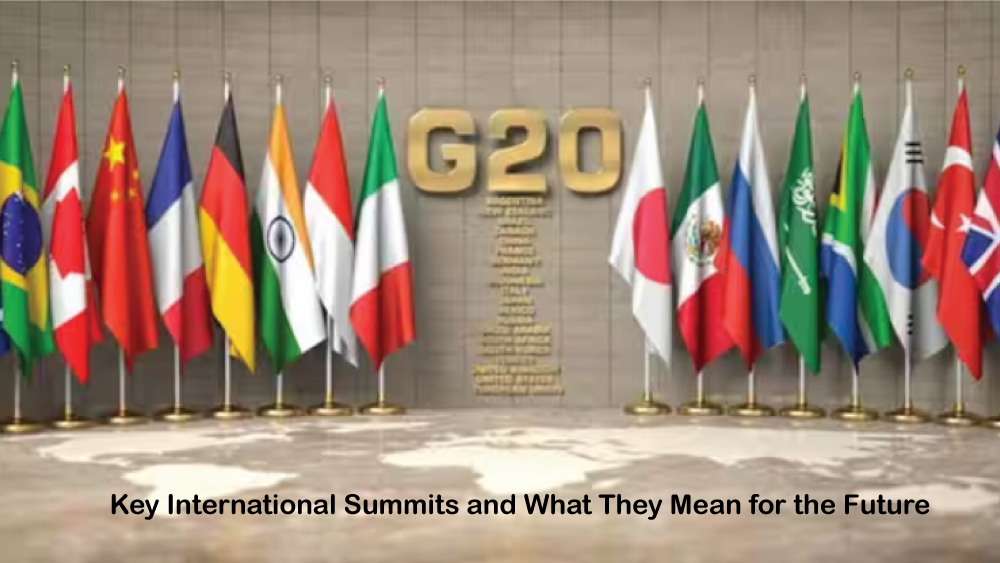
In today’s interconnected world, international summits have become powerful platforms where global leaders gather to address pressing challenges-from climate change and economic instability to geopolitical tensions and technological transformation. These high-level meetings are more than symbolic-they directly shape policies, influence economies, and determine the trajectory of global cooperation.
In this in-depth guide by Global News Grid, we explore the most influential international summits, their outcomes, and what they mean for the future of our world.
Major International Summits
International summits are high-level meetings where heads of state, policymakers, economists, and experts come together to discuss global issues. These summits often result in agreements, declarations, or frameworks that guide international policy.
From climate action to trade agreements, these gatherings serve as the backbone of global governance.
Why Global Summits Matter More Than Ever
In an era marked by rapid change and uncertainty, international summits play a crucial role in:
- Coordinating responses to global crises
- Promoting economic stability
- Addressing climate change
- Strengthening diplomatic relations
- Driving innovation and sustainability
For example, recent discussions at major forums have emphasized collaborative approaches to climate finance, digital transformation, and inclusive growth.
Major International Summits Shaping the Future
G20 Summit
The G20 is one of the most influential global platforms, representing the world’s largest economies.
Recent summits, including the 2023 G20 New Delhi Summit, 2024 G20 Rio de Janeiro Summit, and 2025 G20 Johannesburg Summit, have focused on:
- Inclusive economic growth
- Climate financing
- Digital transformation
- Global South representation
The 2025 summit in Johannesburg marked a historic moment as the first G20 meeting in Africa, highlighting development priorities like inequality reduction and food security.
Future Impact:
The G20 is evolving into a more inclusive platform, giving emerging economies greater influence in shaping global policies.
COP Climate Summits
The COP28 is part of the United Nations climate conference series.
One of the biggest outcomes of COP28 was a global agreement signaling a transition away from fossil fuels-described as the “beginning of the end” of the fossil fuel era.
Key highlights include:
- First-ever global stocktake of climate progress
- Push for net-zero emissions by 2050
- Increased focus on climate finance
These summits require trillions in annual investments to achieve sustainability goals.
Future Impact:
COP summits are shaping global environmental policies and accelerating the shift toward renewable energy.
United Nations General Assembly (UNGA)
The United Nations General Assembly is where all member states discuss global challenges.
Key focus areas include:
- Peace and security
- Human rights
- Sustainable development
- Global governance reforms
Future Impact:
UNGA continues to be a central forum for diplomatic dialogue and global consensus-building.
World Economic Forum (WEF)
The World Economic Forum, held annually in Davos, brings together leaders from business, politics, and academia.
It focuses on:
- Global economic trends
- Technological innovation
- Public-private partnerships
Future Impact:
WEF plays a key role in shaping economic strategies and promoting collaboration between governments and corporations.
BRICS Summit
The BRICS summit highlights cooperation among emerging economies.
Key areas include:
- Alternative financial systems
- Trade cooperation
- Political coordination
Future Impact:
BRICS is increasingly seen as a counterbalance to Western-dominated institutions.
Key Themes Emerging from Global Summits
Climate Action and Sustainability
Climate change is a dominant theme across all major summits. Agreements on reducing emissions and increasing green investments are central priorities.
Rise of the Global South
Countries like India, Brazil, and South Africa are gaining prominence in global decision-making.
Digital Transformation
Artificial intelligence, cybersecurity, and digital economies are now key agenda items.
Economic Stability and Growth
Summits focus on tackling inflation, debt crises, and global trade disruptions.
Multilateral Cooperation
Despite geopolitical tensions, summits emphasize the need for collaboration to solve global challenges.
Challenges and Criticism of Global Summits
While international summits are important, they face several criticisms:
- Lack of enforceable commitments
- Slow implementation of decisions
- Political disagreements among nations
- High costs and environmental impact
For instance, disagreements among major economies sometimes limit the effectiveness of global agreements, especially in climate negotiations.
The Future of International Cooperation
Looking ahead, international summits are expected to evolve in several ways:
More Inclusive Representation
Greater participation from developing nations will reshape global governance.
Data-Driven Decision Making
Technology and AI will enhance policy-making and monitoring.
Faster Action on Global Issues
Urgent challenges like climate change and pandemics will demand quicker, more decisive action.
Integration of Technology
Virtual summits and digital diplomacy will become more common.
Conclusion
International summits are no longer just diplomatic gatherings-they are critical platforms shaping the future of humanity. From climate agreements at COP conferences to economic strategies discussed at G20 meetings, these events influence policies that affect billions of lives.
As highlighted by Global News Grid, the importance of these summits will only grow in the coming years. Their success, however, depends on genuine cooperation, accountability, and the willingness of nations to act on their commitments.
FAQs
What are international summits?
International summits are meetings where global leaders discuss and decide on major global issues like climate change, economy, and security.
Why is the G20 summit important?
The G20 includes the world’s largest economies and plays a major role in shaping global economic policies and cooperation.
What was the key outcome of COP28?
COP28 marked a significant step by signaling a global transition away from fossil fuels and emphasizing stronger climate action.
How do these summits impact everyday life?
They influence policies on fuel prices, economic growth, environmental regulations, and international trade.
Are international summits effective?
While they promote cooperation, their effectiveness depends on how well countries implement agreed policies.
What is the future of global summits?
Future summits will likely be more inclusive, technology-driven, and focused on urgent global challenges.


